
Wildfire Smoke in Sacramento: HVAC Upgrades That Actually Protect Your Indoor Air
Sacramento wildfire seasons are getting longer. Here's what HVAC upgrades actually filter PM2.5, what's a waste of money, and how to build a clean room fast.
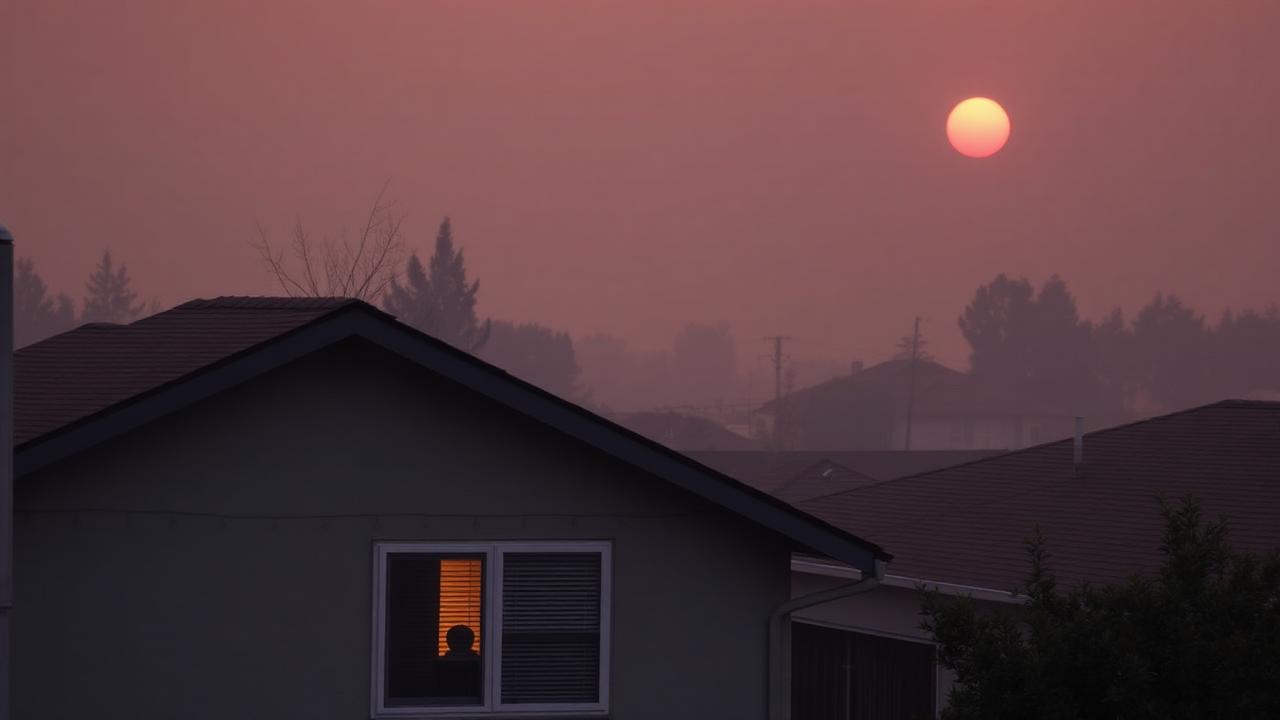
If you've lived in Sacramento for more than a couple summers, you know the drill: AQI hits 200, the sky turns orange, and everyone's eyes start burning indoors. The good news is your HVAC system can be your single best line of defense against wildfire smoke — if it's set up correctly. The bad news is most aren't, and most of the products marketed for "smoke" don't actually filter smoke.
Quick answer: do these 4 things in this order
- Upgrade to a MERV 13 filter ($30-$50 swap, biggest single impact)
- Run the fan continuously during smoke events (thermostat fan setting: ON, not AUTO)
- Seal obvious envelope leaks (bathroom fan dampers, recessed lights, dryer vents)
- Build a one-bedroom clean room with a portable HEPA purifier as backup
For most Sacramento homes, those four steps take indoor PM2.5 from "actively dangerous" to "borderline acceptable" during a smoke event.
Understanding what wildfire smoke actually is
Wildfire smoke is dominated by PM2.5 — particles smaller than 2.5 microns. They're what makes the air orange and what causes the immediate health effects (burning eyes, sore throat, headaches, asthma flares). The very smallest particles (PM0.3) are the most dangerous because they bypass your lungs and enter the bloodstream.
Standard 1-inch fiberglass filters (MERV 4-6) capture almost none of this. They're designed to protect your HVAC equipment from large dust, not to clean your air.
The MERV scale (and why MERV 13 is the magic number)
- MERV 4-6: Cheap fiberglass. Useless for smoke.
- MERV 8: Pleated, captures some pollen and dust mites. Marginal for smoke.
- MERV 11: Captures most pet dander, mold spores, some smoke. Helpful but not enough.
- MERV 13: Captures most PM2.5 wildfire smoke particles. The current sweet spot for residential.
- MERV 16: Hospital-grade. Captures bacteria and most viruses. Requires specific equipment.
- HEPA: Captures 99.97% of 0.3 micron particles. Doesn't fit in standard residential HVAC without a bypass system.
For most Sacramento homes, MERV 13 is the answer. It's a $30-$50 upgrade that does roughly 80% of what you actually need.
Important: not every system can handle MERV 13
Older or weaker blowers can struggle with MERV 13's higher pressure drop. Symptoms of a system that can't handle it: - Reduced airflow at vents - Frozen indoor coil in summer - Furnace short-cycling on temperature limit in winter - Whistling sound at the filter
Have a tech measure static pressure before and after upgrading. If your system can't handle MERV 13, the fix is usually a deeper filter (4-inch or 5-inch media cabinet) which has more surface area at the same MERV rating.
Run the fan continuously during smoke events
Most thermostats have an "On" setting for the fan separate from cooling/heating. During smoke days, switching the fan to ON keeps air constantly cycling through the filter — turning your HVAC system into a whole-house air purifier.
- Yes, your electric bill ticks up (typically $0.50-$2/day depending on blower type)
- Yes, it's worth it during a multi-day smoke event
- Switch back to AUTO when AQI drops below 100
Variable-speed (ECM) blowers cost much less to run continuously than older PSC blowers. If you've been thinking about upgrading, this is a hidden benefit.
Seal the envelope (the missing 30%)
Your filter only cleans the air your HVAC system pulls through it. Smoke also leaks straight in through:
- Bathroom exhaust fan dampers (most stick open) — $25 backdraft damper kit
- Recessed can lights in attic-adjacent ceilings — caulk or replace with airtight LED inserts
- Old dryer vents (often missing the outer flap) — $15 louvered hood
- Single-pane or worn-out windows — temporary plastic film during heavy smoke
- Attic access hatch — weatherstrip
- Range hood vent — close the damper when not cooking
A focused $200 weatherization pass will pay for itself the first smoke event.
Whole-house air cleaner upgrades (the real solution)
If you have asthma, young kids, seniors, or you just want to stop fighting smoke every August, a whole-house air cleaner installed inline with the HVAC is the gold standard.
Option 1: Deep media cabinet (MERV 13-16) — $800-$1,400 installed - 4 or 5-inch pleated filter in a dedicated cabinet - No power required, no maintenance other than yearly media replacement - Captures MERV 13-16 with low pressure drop - Best balance of cost, performance, and simplicity for most Sacramento homes
Option 2: Electronic precipitator — $1,500-$2,500 - Charges particles, then collects on metal plates - Captures sub-micron particles (smaller than MERV alone) - Plates need cleaning every few months - Some models produce trace ozone (verify CARB-certified)
Option 3: Whole-house HEPA bypass — $2,500-$4,500 - Hospital-grade filtration - Side-stream design protects HVAC blower from the high pressure drop - Best option for severe asthma or immunocompromised household members - Filters cost $80-$150 every 6-12 months
Option 4: PCO (photocatalytic oxidation) and ionizer add-ons - Marketed heavily for smoke - Honestly: skip them for smoke. They're designed for VOCs and microbes, not PM2.5.
What to skip (the wastes of money)
- Standalone "ionizers" with no physical filter (don't actually remove particles from air)
- Ozone generators — banned by California Air Resources Board for occupied spaces (genuinely dangerous)
- UV lights marketed for smoke — UV kills microbes; it does nothing to particles
- "Air purifier paint" and other novelty products — no peer-reviewed evidence
If a salesperson is pitching anything that doesn't physically capture particles in a filter, ask for the test data. Real products have it. Snake oil doesn't.
Build an emergency one-room clean zone
If smoke catches you unprepared and you can't run a whole-house upgrade in time:
- Pick the smallest bedroom with a door
- Close it off — door shut, vents closed if not running HVAC
- Run a portable HEPA purifier sized for the room (CADR ≥ 200 for a 12x12 room)
- Put a wet towel along the door bottom to seal gaps
- Sleep there during smoke events
A single $250 HEPA purifier in a sealed bedroom can drop PM2.5 by 80% in an hour. For households without whole-house upgrades, this is the lifesaver during severe smoke days.
Frequently asked questions
How often should I change a MERV 13 filter during smoke season? Every 30-45 days during heavy smoke, vs. 90 days normally. The filter loads up dramatically faster.
Will a MERV 13 filter hurt my AC? Only if your system was sized assuming MERV 6. Have a tech measure static pressure. If your system can't handle MERV 13 in a 1-inch frame, upgrade to a 4-inch media cabinet (more surface area, same filtration, much lower pressure drop).
What about portable HEPA purifiers vs. whole-house? Whole-house cleans the entire home through your existing ductwork. Portables only clean the room they're in. For wildfire smoke in the whole house, whole-house wins. For one bedroom or office, a good portable is enough.
Does fire damage to nearby homes mean my house is contaminated? If smoke entered the house, surfaces and soft furnishings (rugs, upholstery, drapes) can hold smoke odor for months. HVAC ductwork can also retain particles. After a major smoke event, replace your filter immediately and consider a duct cleaning if odors persist.
What AQI level should I take action at? - AQI 0-50: Normal operation - AQI 51-100: Switch fan to ON, ensure MERV 13 in place - AQI 101-150: Close windows, run fan continuous, limit outdoor time for sensitive groups - AQI 151-200: Close all windows, run any portable HEPA units, sensitive groups stay indoors - AQI 200+: Clean room mode, mask outdoors, consider relocating vulnerable family members
Bottom line
Wildfire smoke is the new normal in Sacramento summers. The good news: a $30 filter upgrade and a $200 weatherization pass solves most of the problem for most homes. For families with health vulnerabilities, a $1,000-$2,500 whole-house upgrade is the real long-term answer.
Want a smoke-ready HVAC assessment for your Sacramento home? Call or text River City Heating & Cooling at (916) 585-6277.
Need help in Sacramento?
Same-day HVAC service across the greater Sacramento area. Honest pricing, written quotes, lifetime workmanship guarantee.
Call (916) 585-6277